Zlata Ivleva Side project
Turning a psychology finding into a ritual for letting go
At a glance
- The problem
- Journaling apps save every word, but letting go works best when you write a thought down and then release it.
- The decision
- Make letting go a short, tactile ritual that respects people's privacy.
3 min read
- Built with
- Next.js, Supabase and ElevenLabs
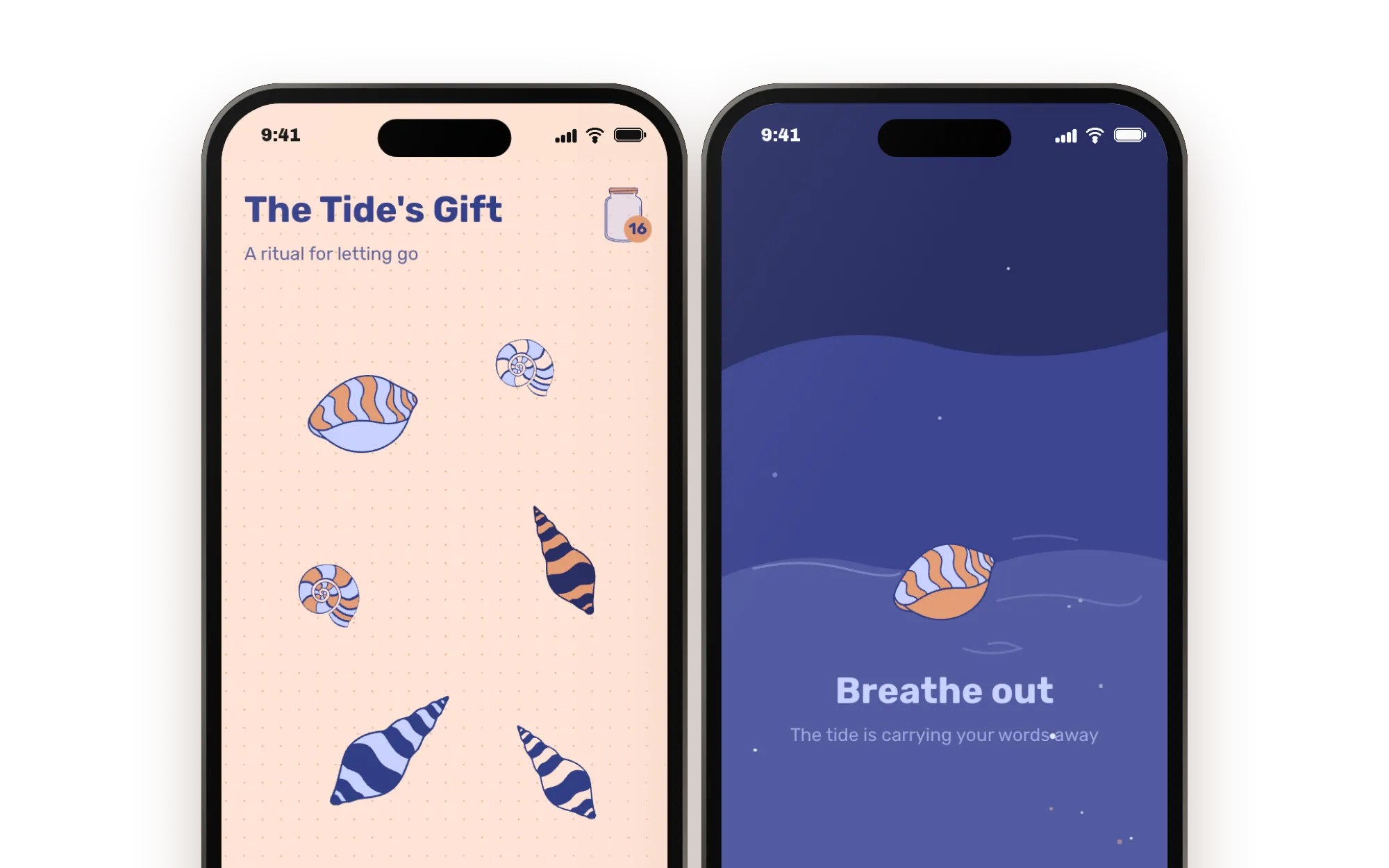
Writing a thought down and then discarding it helps your mind let it go
There’s an idea in psychology that writing something down and then physically discarding it signals to your brain that you’re done with it. Most journaling apps only do the first half. They’re built to save what you write, so the thought stays in an archive you can scroll back to. I wanted to build the second half, and make it feel playful, warm and tactile.
The ocean has always been the most peaceful place I know, so the ritual became a beach.
Letting go takes three simple actions: write a thought, call the tide, collect your sea glass
You write a thought on a shell. When you’re ready, you call the tide, and a wave washes the shells away along with what you wrote on them.
Each time you let go, a piece of sea glass drops into your jar. Over time the jar fills up, so you can see how much you’ve let go of, even though none of the words are kept. That visible progress is a reason to come back the next time something is weighing on you.
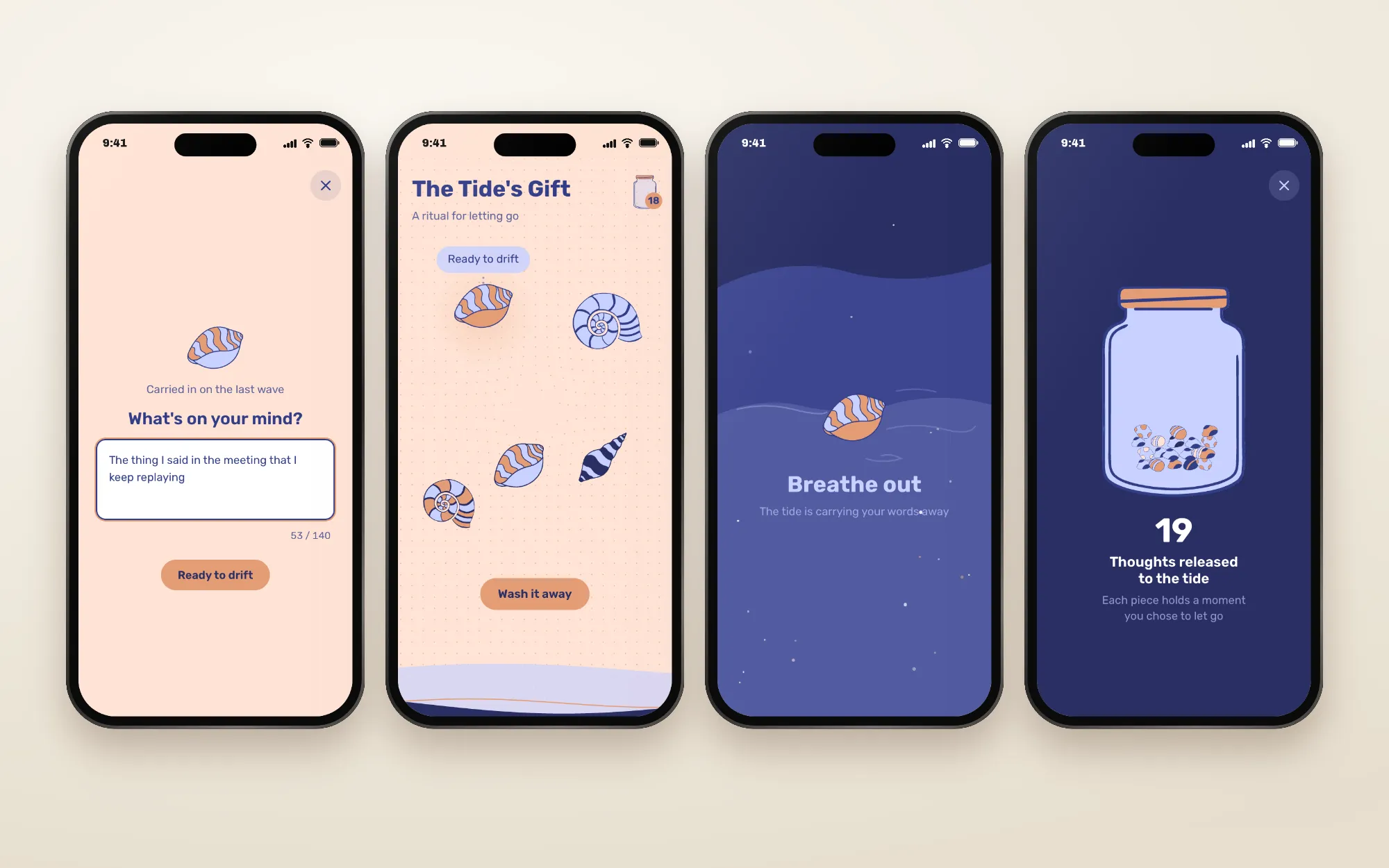
Getting the interactions right took a custom sandbox, because describing motion in words wasn’t working
The wave is the moment the whole app builds up to, so it had to feel like the ocean, not like an animation. In the first version, the layers of water moved together as one stiff block. I tried describing what I wanted to Claude, and round after round didn’t get us closer, because it’s hard to put into words how water moves.
So I had Claude build a sandbox: a private test version of the app with toggles and sliders for timing and movement. I could tune it myself, see the result right away, and keep the settings that matched what I had in mind. That’s how I fine-tuned every interaction in the experience, from the wave to the shells and the jar.
Sound engages another sense, so every action has its own sound
Part of this experiment was exploring sound. What you hear makes the experience richer, and it engages a sense most apps ignore. So I designed a sound for every step: sand shifting as you drag a shell, a soft tap when you pick one up and another when you set it down, the wash of the wave, glass landing in the jar, and the jar opening. I made all six sounds with ElevenLabs. Getting the texture, pitch and fade of each one right took real design work, a lot more than asking for a whoosh.
What you write never leaves your device, and your account saves only your progress
Privacy was part of the idea from the start: what you write in the app should stay with you. The app still needed accounts, because the jar only works if your progress is there the next time you come back, on any device. So signing in with Google saves one thing: how many pieces of sea glass you’ve collected.
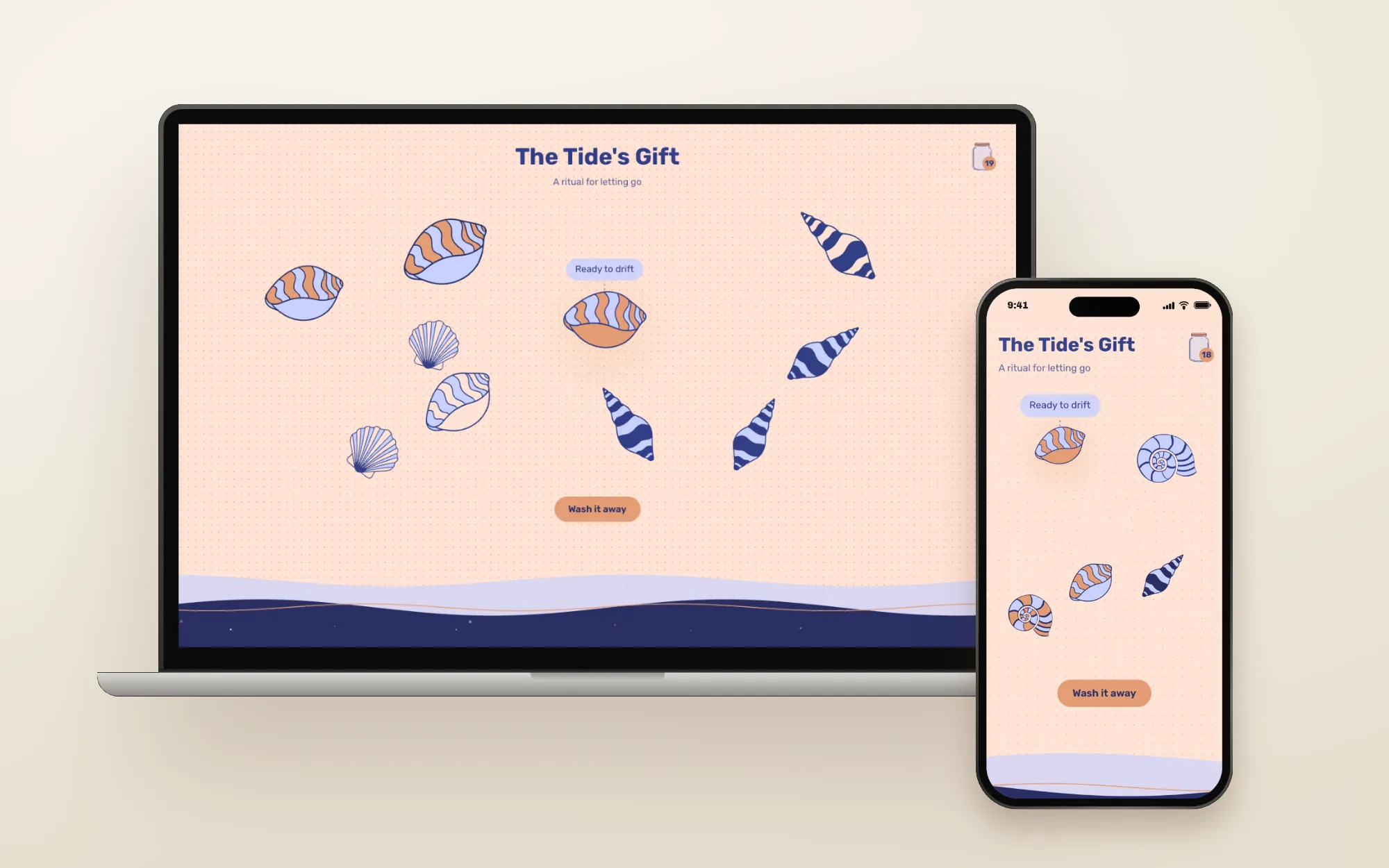
While checking what the database was recording, I noticed it was also saving the actual text people typed on their shells, and keeping it until the tide came. I worked with Claude to change that. Now what you write is kept only in your own browser, and only until you call the tide, which deletes it for good. Your account holds your progress and nothing you wrote. The trade-off is that clearing your browser before calling the tide loses that thought, which is an acceptable way to fail for an app about letting go.